
Physics-Enhanced Machine Learning (PEML) accelerates High-Temperature Heat Pump compressor optimization by coupling 3D Inverse Design with surrogate modeling. Using 15 physics-based parameters and under 100 CFD runs on a standard 32-core cluster, PEML eliminated AI hallucinations, delivering multi-point efficiency and range gains with under 1.1% prediction error.
Goal: The team used Physics-Enhanced Machine Learning (PEML) for an automated multi-point, multi-objective optimization of an HTHP compressor.
Meanline Optimization: Using TURBOdesign Pre, they integrated cycle codes with meanline compressor design. With TURBOdesign Pre run in scripted batch mode, they set up and explored a design space specifically looking for the optimum range for the coefficient of performance (COP).
The Power of PEML: By using 3D Inverse Design as the generative engine, the system's inputs control the fluid physics (like blade loading), and the software solves for the corresponding 3D blade shape. This means 100% of the generated designs land near the target duty point, eliminating physically impossible outputs.
Efficiency: The entire 3D blade shape could be described using just 15 parameters. Because the data space is clean and bounded by physics, the system built a highly accurate surrogate model using fewer than 100 data points to deliver multi-point, multi-objective optimal designs - which were then verified by CFD.
High-Temperature Heat Pumps as a Transformational Technology
In the industrial sector, the pressure to decarbonize has turned high-temperature heat pumps (HTHP) into a vital technology. Capable of delivering heat lift temperatures above 100°C, these systems can recover and repurpose massive amounts of industrial waste heat. However, their overall viability hinges on a key engineering challenge: designing high-efficiency compressors that can handle eco-friendly, low-GWP (Global Warming Potential) refrigerants.
Designing these complex, highly specialized turbomachinery parts traditionally demands immense computational power and lengthy optimization cycles. In this blog we show how Advanced Design Technology (ADT) is bypassing these constraints using Physics-Enhanced Machine Learning (PEML).
To appreciate this optimization breakthrough, it helps to understand why high-temperature heat pump (HTHP) compressors are so difficult to engineer. Traditional commercial heat pumps are designed for space heating or domestic hot water, usually operating at output temperatures below 80°C. Industrial waste heat recovery, however, demands temperatures ranging from 100°C to over 150°C to generate process steam or hot water for industries like food processing, chemical manufacturing, and paper milling. Achieving these massive "heat lifts" requires a compressor that can withstand significantly higher pressure ratios, elevated thermal stress, and dense, fast-moving vapor without sacrificing structural integrity or thermodynamic efficiency.
Furthermore, modern environmental regulations have forced a massive shift away from high-GWP (Global Warming Potential) synthetic refrigerants toward eco-friendly alternatives like natural hydrocarbons (e.g., butane or pentane), water vapor (steam), or new low-GWP synthetic blends. These green refrigerants exhibit vastly different thermodynamic properties, vapor densities, and sonic speeds compared to traditional fluids. Consequently, engineers can no longer rely on legacy, rule-of-thumb design templates. Every HTHP compressor stage must be custom-engineered from the ground up to match the unique aerodynamic behaviour of the specific refrigerant cycle it runs on, a reality that makes rapid, high-fidelity design tools absolutely essential.
Why Standard AI Fails in Turbomachinery
While AI and Machine Learning (ML) are transforming everyday software, standard ML approaches struggle when applied to aerodynamics and fluid mechanics:
- The "Big Data" Problem: Popular AI models like Large Language Models (LLMs) rely on billions of easily scraped datasets. Turbomachinery data, by contrast, is highly limited, proprietary, and incredibly expensive to generate via high-fidelity 3D CFD (Computational Fluid Dynamics) simulations.
- The Hallucination Risk: Standard Artificial Neural Networks (ANNs) lack inherent knowledge of physical laws. Without conservation of mass, momentum, or energy built into their architecture, they require tens of thousands of CFD training runs just to avoid predicting physically impossible "imagined" flow fields.
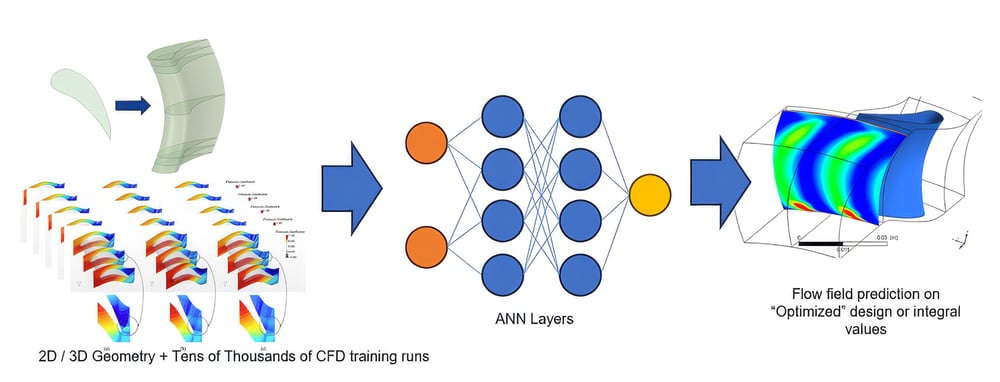
Figure 1: Standard architecture ANNs require tens of thousands of training points, but have no concept of the physical behaviour of turbomachines
- The Limits of PINNs: Physics-Informed Neural Networks (PINNs) try to solve this by embedding partial differential equations (like the Navier-Stokes equations) directly into the loss function. While clever, they are notoriously difficult to train, struggle with complex 3D geometries, and fall victim to spectral bias (missing high-frequency changes like shockwaves).
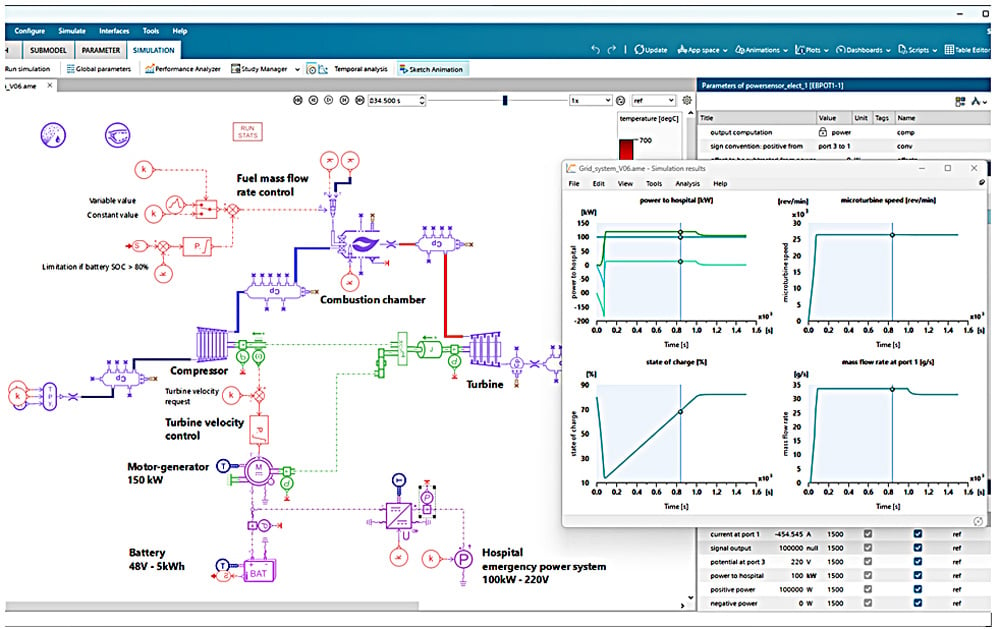
Figure 2: PINNs overcome the hallucination problem, but are incredibly case specific and suffer from spectral bias
The Breakthrough: Physics-Enhanced Machine Learning (PEML)
Instead of forcing a standard neural network to learn physics from scratch, ADT's approach encodes the physics straight into the input tensor input itself using 3D Inverse Design.
In traditional "direct design," engineers manipulate physical blade angles and thicknesses, which often yields massive performance scattering during automated runs—requiring endless CFD iterations just to find geometries that meet the basic duty parameters.
In contrast, 3D Inverse Design uses the required aerodynamic performance (like the blade loading and circulation distribution) as the starting input. The software then solves the underlying fluid dynamics to generate the corresponding 3D blade shape.
By utilizing TURBOdesign1 as a generative engine for machine learning, the design space becomes inherently bounded by physics:
- Fewer Parameters: Complex 3D blade shapes are fully and flexibly described using just 13 to 15 parameters (such as blade loading parameters and wrap angles) rather than dozens of geometric coordinates.
- No Infeasible Designs: Because the target head and work input are baked into the starting parameters, 100% of the generated designs land right around the target duty point (typically within a +/-5% band of variation)
- Small Datasets: Because the data space is clean and pre-filtered by physics, you do not need tens of thousands of runs. A simple response surface surrogate model can achieve world-class accuracy with fewer than 100 data points.
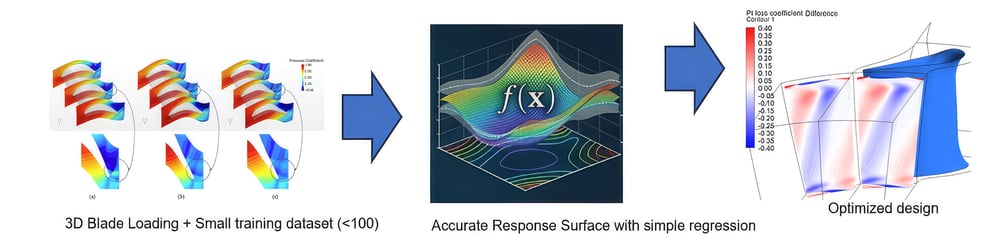
Figure 3: PEML encodes the flow physics in the input tensor, then uses a simple response surface surrogate model fitted to a highly selective and targeted set of datapoints.
The predictive model itself is simple, an n-dimensional response surface surrogate model fitted to a highly selective and targeted set of datapoints. But the physics encoded in the input tensor represents all the complexity of a 3D turbomachinery flow field.
Case Study: Optimizing an HTHP Compressor Stage
To prove the power of this system, the team showcased an automated multi-point, multi-objective optimization workflow for a High-Temperature Heat Pump Compressor.
Optimizing Meanline Design and Sizing
Using TURBOdesign Pre, the team integrated cycle codes with meanline compressor design to pinpoint the ideal operating specifications. The system mapped compressor performance across varying speeds, establishing a nominal design point optimized for real-world variable frequency drive (VFD) applications.
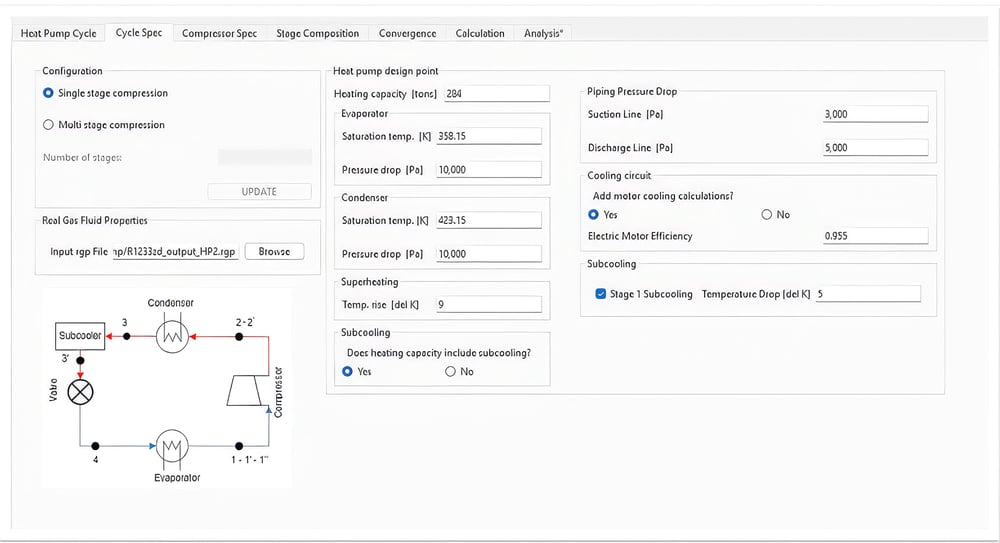
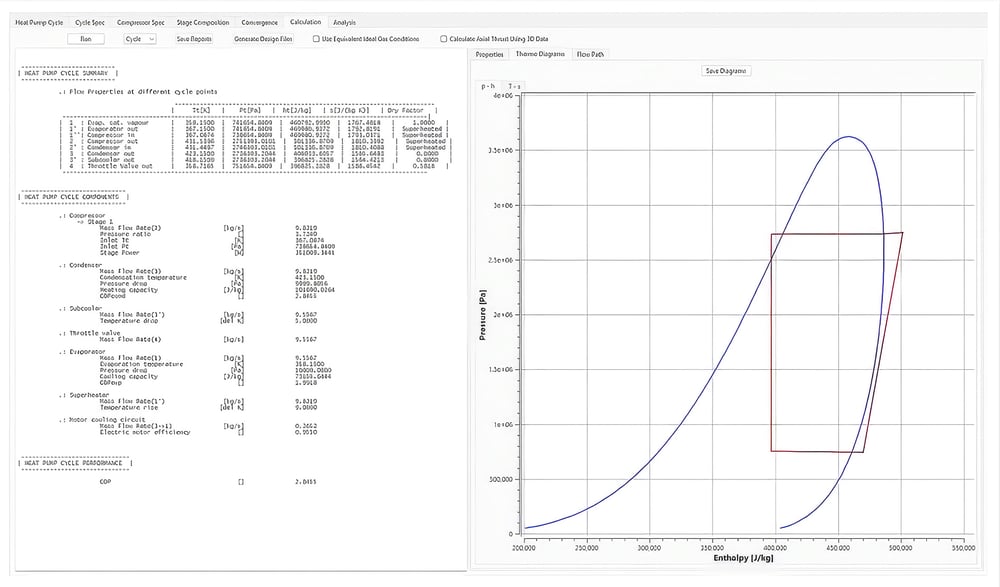
Fig 4: TURBOdesign Pre instantaneously generates the meanline shape and performance maps for the refrigeration cycle from the key input parameters
Because TURBOdesign Pre can be run in scripted batch mode we can set up and explore a design space based on searching for optimum range of coefficient of performance (COP). The input parameters are:
- RPM
- Outer diameter (D2)
- Leading edge Hub diameter (D1 Hub)
- Outlet tip width (B2)
- Axial Length (AxL)
- Diffuser pinch ratio (B4/B2)
An the outputs from each meanline calculation are
- COP @ 100% heating capacity
- rVtheta* @ trailing edge
- ∆𝐷_𝑠= (𝐷_(𝑠, 𝑟𝑒𝑞𝑖𝑟𝑒𝑑)−𝐷_(𝑠,𝑎𝑐𝑡𝑢𝑎𝑙))/𝐷_(𝑠,𝑟𝑒𝑞𝑢𝑖𝑟𝑒𝑑)
∆𝐷_𝑠 is a measure of the distance a particular design has from the Cordier Line (the line of most efficient designs when plotted on a Specific Diameter vs Specific Speed plot)
The training dataset contained 200 points as a latin hypercube sample from the design space. From this we construct a response surface and test its predictive power by mapping response surface predictions against actual calculated values for a given set of inputs. The figure below shows that the response surface model is extremely accurate (R^2 ~=1) so we can have a high degree of confidence that the design that we choose for optimum CoP range (the yellow highlighted point) will deliver the performance required.
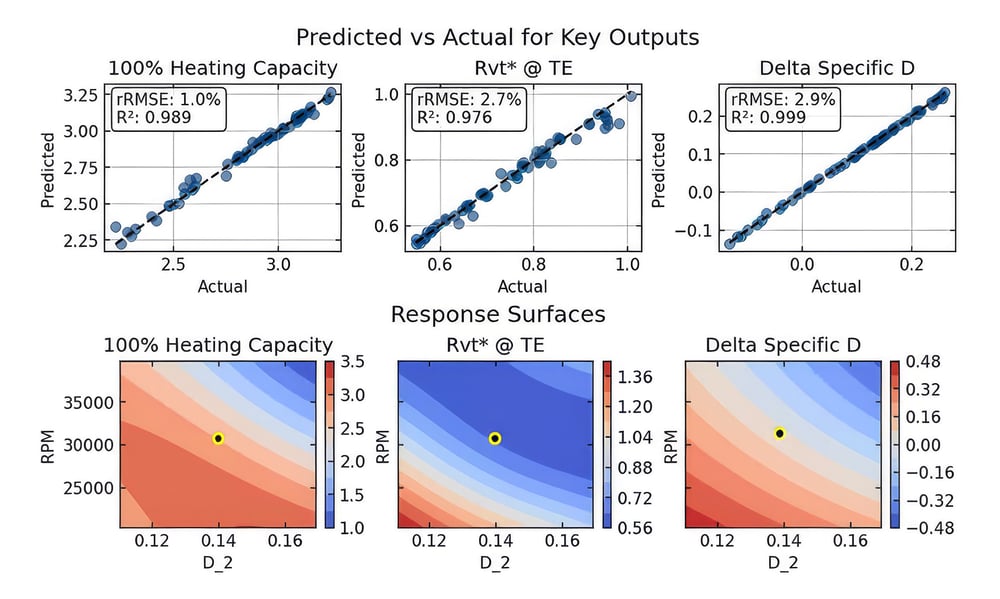
The chosen optimal has the following dimensions:
- Blade Speed: 30140 rpm
- D2: 138.2mm
- RvT* at impeller trailing edge: 0.66
- Calculated CoP: 2.845
We can now take this meanline design, with its defined specific speed, diameter and work coefficient, and create the optimum 3-dimensional blade shape in TURBOdesign1.
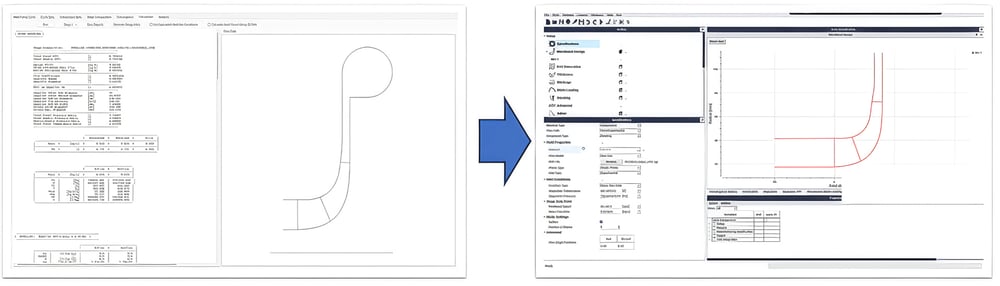
Fig 5: The optimal meanline design is transferred directly into TURBOdesign1
Setting Up the PEML Optimizer
The team established three aggressive, competing multi-point design objectives within TURBOdesign1:
- Operating Point 1 (Design Point): Maximize stage efficiency.
- Operating Point 2 (Surge Side): Improve the pressure ratio at low flow rates to widen the surge margin.
- Operating Point 3 (Choke Side): Maximize mass flow at low pressure ratios to improve the choke margin.
TURBOdesign1 makes it very easy to set up the design matrix that controls the variation in 3D blade shape. In this case we use 15 input parameters that control the distribution of blade loading, the splitter work ratio, the position of the main a splitter leading edge and the trailing edge stacking angle.
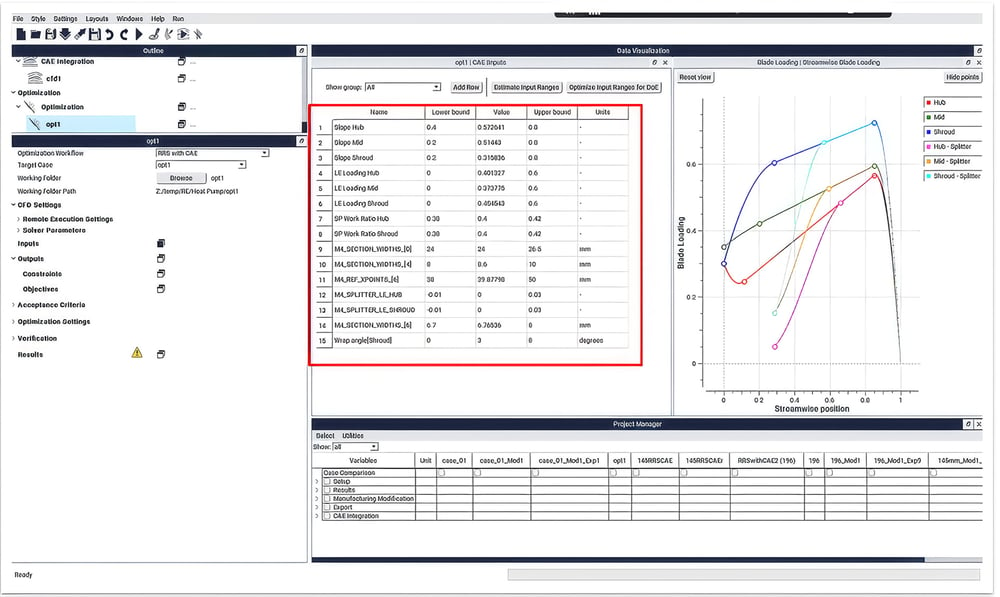
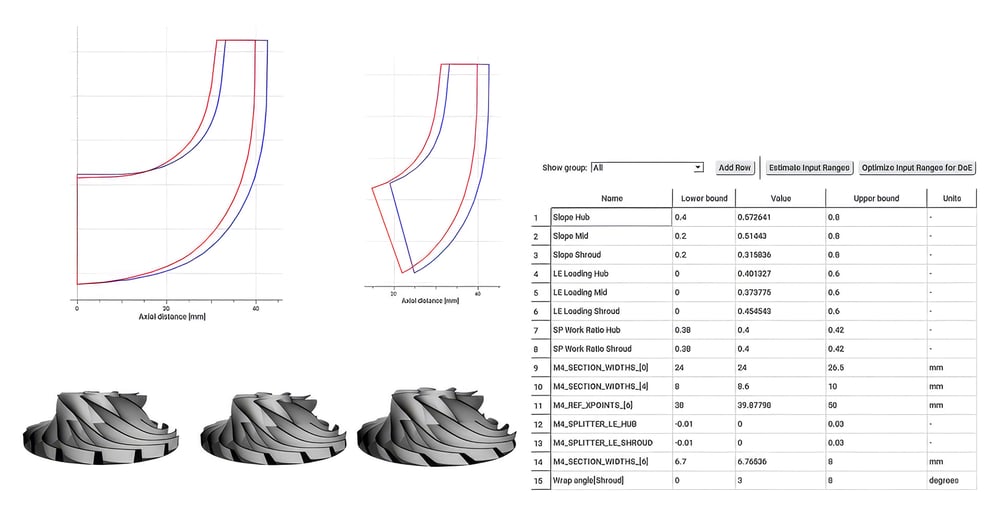
Fig 6: Design space parameters for controlling blade loading, splitter work ratio and leading/trailing edge shape
Running the Automated Workflow
With a few clicks, TURBOdesign1 automatically handled the entire pipeline: meshing, pre-processing, running CFD simulations, and post-processing.
- The Computational Footprint: 40 cases converged across all 3 operating points. That’s 120 total high-fidelity CFD calculations, which took only 16 hours running on a modest 32-core cluster.
- The real power of 3D Inverse Design is highlighted here, as each of the 40 candidates performed to within 5% of the target duty. Thus saving huge amounts of computational effort and data management by never procuring infeasible geometries or “aerodynamically unsatisfactory” candidates in the training data.
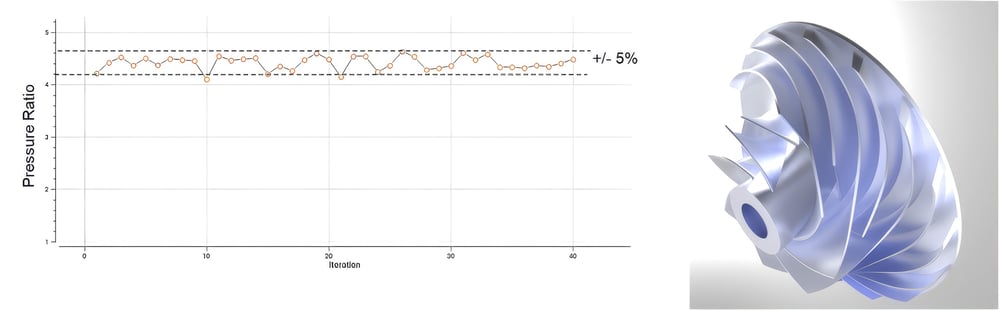
Fig 7: All candidates in the design matrix give performance close to the required duty
Selecting the Winner
The software mapped the results onto a multi-dimensional Reactive Response Surface (RRS) to construct a Pareto optimal front. Designers could visually evaluate trade-offs in real-time, picking the optimal balance for their specific application.
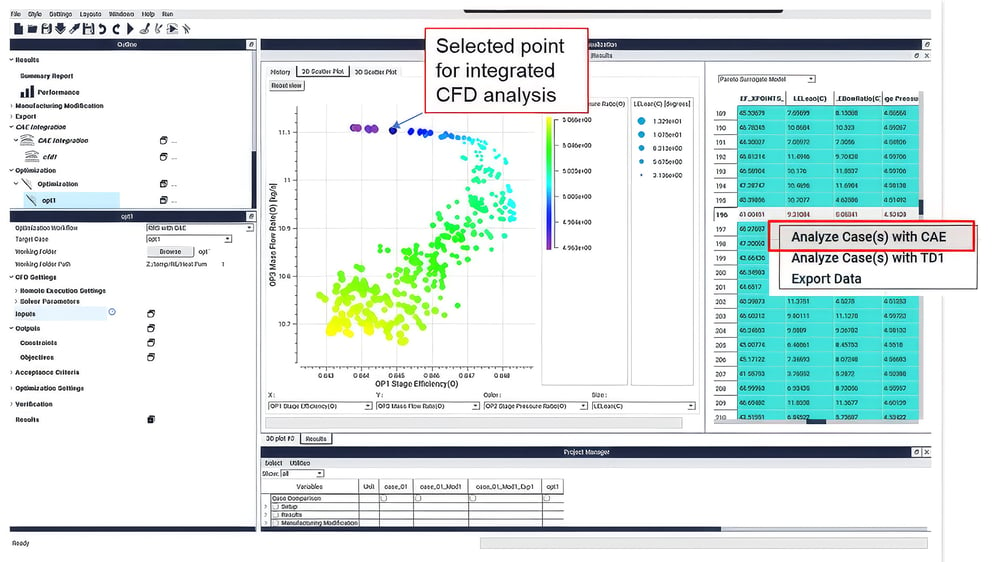
Fig 8: A Pareto front for the competing objective is constructed from the surrogate model, trained on the high-fidelity CFD cases. As this is a multi-objective optimisation then each point on this front is an optimal design - it just pays-off against the other designs in different ways
When the chosen optimized design was cross-checked against a full CFD verification run, the results were stunning:
- Significant and compliant performance gains: The optimized compressor achieved substantial improvements in both pressure ratio and stage efficiency across the operating map compared to the baseline design, just as we had requested in the optimizer set-up
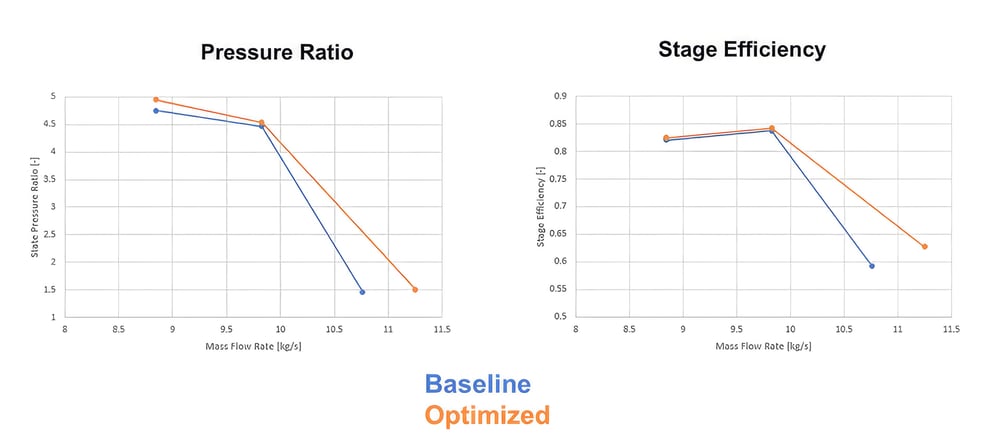
- Exceptional predictive accuracy: The RRS surrogate model's predictions matched the high-fidelity CFD results with a maximum error of less than 1.1%.
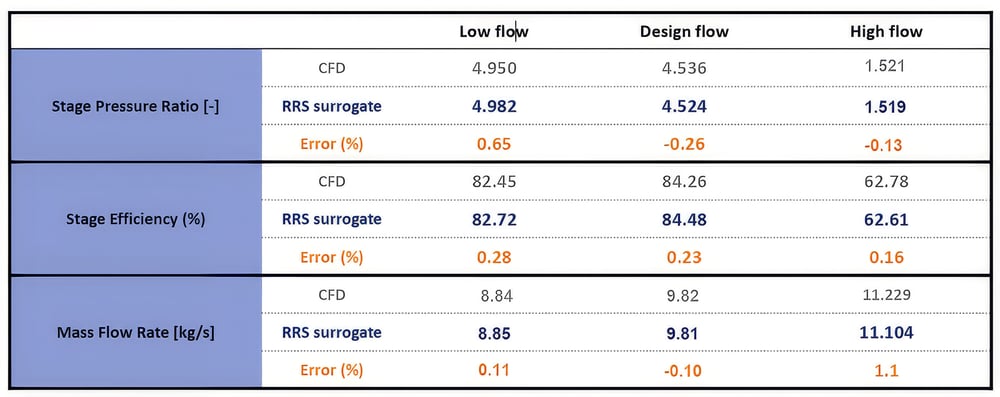
This accuracy is orders of magnitude greater than that seen in typical attempts to use ANN or PINN to generate optimal turbomachinery designs.
Conclusion: High-Fidelity Results at a Fraction of the Cost
The takeaway for turbomachinery engineers is clear: you don't need massive supercomputers or millions of data points to benefit from Machine Learning.
By pairing a Reactive Response Surface with the physics-rich framework of 3D Inverse Design, ADT’s workflow delivers application-specific, multi-point optimization natively integrated with industry-standard CAE tools (Ansys, Siemens, Cadence). This system cuts traditional optimization timelines down to a fraction of their original cost and time, and it is available to be deployed today across compressors, pumps, fans, and turbines alike.
If you want to see how Physics-Enhanced Machine Learning can accelerate your design cycles then get in touch with our team at sales@adtechnology.com or explore the TURBOdesign Suite features on our website.
Book a LIVE demo on the design of a turbomachinery application of your choice.
Our demo is tailored to your specific application and design challenges


Share This Post