
In this paper, a 3D inverse design code TURBOdesign1 is applied in a parametric way to the design of a box fan rotor, the blade geometry of an axial box fan. The inverse method designs the blade for a specified distribution of blade loading and spanwise circulation (or specific work) distribution. In changing the blade loading and spanwise circulation distribution, 4 different fan designs are created.
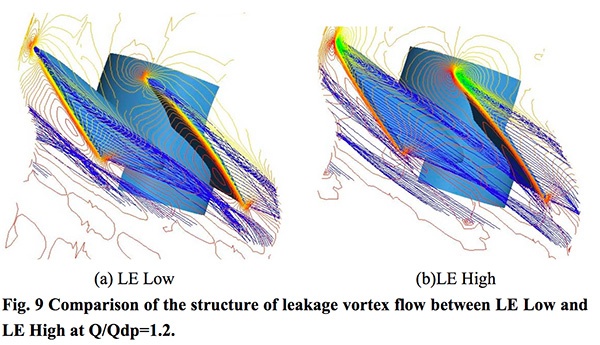
The flow through these fans are computed by using a 3D CFD code, and compared to that of a conventional design method. The results of the CFD computations indicate that a reduction in blade loading at the leading edge of the fan can lead to a noticeable change in performance characteristics as well as the strength of the tip leakage vortex which may result in a reduction in fan noise.
Book a LIVE demo on the design of a turbomachinery application of your choice.
Our demo is tailored to your specific application and design challenges


Share This Post